For most international patients considering rhinoplasty in Korea, safety is the first and most important concern. A nose surgery is not a minor decision. It affects your appearance, breathing and confidence, because the results are largely permanent. It is natural for patients to want reassurance before traveling abroad for surgery.
Korea is widely known for its advanced cosmetic surgery techniques and high procedure volume. At the same time, documented issues such as ghost surgery incidents and uneven clinic oversight in the past have raised valid questions about patient safety of rhinoplasty in Korea. These realities can feel confusing, especially for those unfamiliar with the Korean medical system.
One important distinction is often overlooked. Safety is not determined by the country alone, but by the specific clinic, surgeon credentials, and systems in place. In this guide, we explain the real risks, current regulations, and safety standards used by reputable clinics. We do not promise risk-free surgery, but aim to support informed, realistic decision-making based on verified information:
How Safe Is Rhinoplasty in Korea for International Patients?
Korea has become a global hub for rhinoplasty or nose job, attracting patients from around the world. This reputation is built on a high concentration of plastic surgery clinics, on the surgeons who focus heavily on nasal procedures, and decades of technical development in both aesthetic and functional rhinoplasty. Many surgeons in Korea perform rhinoplasty frequently, which has contributed to strong procedural familiarity and refined techniques.
At the same time, safety outcomes are not uniform across all clinics. While some facilities operate under strict medical standards with qualified surgeons and structured care systems, others may lack the same level of oversight. Differences in accreditation, surgeon training, anesthesia management, and post operative care can all influence patient outcomes. This is why experiences can vary widely, even within the same city.
For international patients, this variability makes informed decision making especially important. Safety is not guaranteed by choosing Korea as a destination alone. It depends on verifying surgeon credentials, understanding clinic standards, and confirming how care is managed before, during, and after surgery. When these factors are carefully evaluated, rhinoplasty in Korea can be performed safely. Without that verification, risks increase regardless of the country’s reputation.
Korean Plastic Surgery Regulations That Protect Patient Safety
Korea has established formal regulations to improve patient safety in plastic surgery. These systems were developed in response to past gaps in oversight and are designed to reduce preventable risk. For international patients, understanding what these regulations mean in practice is essential:
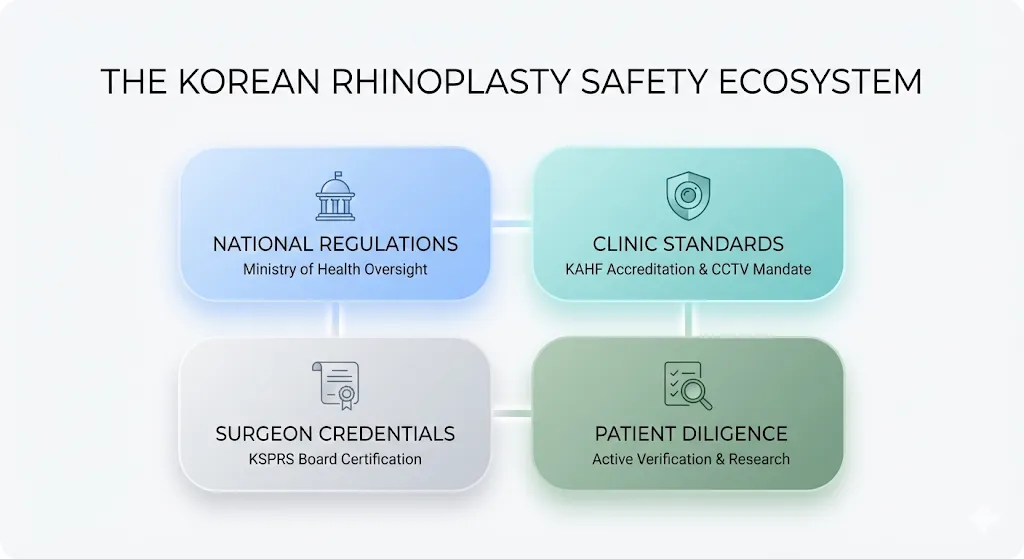
• Medical oversight: Korea’s plastic surgery system operates under national medical laws and Ministry of Health supervision. These frameworks set baseline requirements for surgeon training, facility standards, anesthesia safety, and emergency preparedness.
• KSPRS certification: Board certification through the Korean Society of Plastic and Reconstructive Surgeons reflects structured surgical training and case experience. It helps distinguish surgeons who have completed standardized education from those without formal plastic surgery credentials.
• KAHF accreditation: KAHF accreditation evaluates clinics across more than one hundred safety and quality criteria. These include infection control, anesthesia management, emergency response systems, and patient care protocols. Only a small number of clinics meet this level of assessment.
• CCTV mandate: Operating room CCTV is required for surgeries performed under general anesthesia. Patients have the right to request footage as legal evidence if concerns arise. This measure was introduced to increase accountability and transparency during surgery.
These regulations create important safeguards, but they are not guarantees. Regulations reduce risk only when clinics fully comply and when patients actively confirm credentials and systems. Understanding how these protections work allows patients to make safer and more informed choices.
Real Risks of Ghost Surgery in Korea
Ghost surgery is one of the most serious safety concerns raised in discussions about plastic surgery in Korea. While it does not represent the experience of most patients, the risk is real and has shaped how regulations and patient protections have evolved. Understanding what ghost surgery involves and why it occurs helps international patients recognize where vulnerability exists and how safeguards are meant to work.
What ghost surgery involves
Ghost surgery describes situations where the surgeon who performs the operation is not the surgeon presented to the patient during consultation. This usually occurs after anesthesia is administered, when the patient is unconscious and unable to confirm who is operating. In some cases, an unlicensed or unauthorized substitute surgeon may perform part or all of the procedure without the patient’s knowledge or consent.
Why ghost surgery became a safety concern
Ghost surgery drew national attention after multiple documented injuries and fatalities were reported over several years. These cases revealed gaps in accountability, particularly in high volume clinics where oversight was limited. Public awareness and legal action led to regulatory reforms designed to increase transparency and strengthen patient protection.
Why anesthesia increases patient vulnerability
General anesthesia plays a central role in ghost surgery risk. Once anesthesia begins, patients lose the ability to verify surgeon identity or observe what is happening in the operating room. For this reason, safeguards must be established before surgery rather than relying on trust during the procedure itself.
Ghost surgery highlights an important truth about surgical safety. Risk does not disappear because a destination is well known or widely trusted. It is reduced through accountability, transparency, and systems that protect patients when they are most vulnerable.
By understanding how ghost surgery occurs and why reforms were introduced, patients are better equipped to make informed decisions and to prioritize clinics that demonstrate clear responsibility and oversight.
How Patients can Prevent the Risk of Ghost Surgery
Ghost surgery is not prevented by trust alone. It is reduced through preparation and verification that take place well before surgery day. Patients who understand where risks arise and how clinics operate are better positioned to protect themselves. Here are few precautions you can take in order to prevent the risk of ghost surgery:
1: Surgeon identity: Patients should confirm that the surgeon they meet during consultation is the same surgeon scheduled to perform the operation. Requesting written confirmation helps establish accountability and reduces the risk of last minute substitutions.
2: Pre surgery access: Meeting the surgeon more than once before surgery builds familiarity and responsibility. Clinics that limit access to the operating surgeon or avoid direct communication may signal weaker safety practices.
3: CCTV transparency: Patients can ask whether operating room CCTV is installed and how footage may be accessed if concerns arise. This measure supports transparency and reinforces accountability during surgery.
4: Clinic conduct: Rushed consultations, unclear answers, or pressure to schedule surgery quickly can indicate a volume driven approach. Clinics that prioritize open communication and detailed explanations tend to have stronger patient safety systems.
Taken together, these steps shift control back to the patient. When surgeon identity is verified, transparency is confirmed, and clinic behavior is carefully assessed, the risk of ghost surgery is significantly reduced.
What are the Risks and Complications of Nose Job in Korea
Rhinoplasty is a common procedure, but it is still surgery and involves medical risk. Understanding potential complications helps patients set realistic expectations and approach recovery with greater confidence.
Most patients experience temporary effects such as swelling, bruising, numbness, or mild asymmetry during healing. These changes are usually part of the normal recovery process and tend to improve with time and appropriate follow up care.
Infection is uncommon when proper surgical protocols are followed, but it can occur, most often within the first week after surgery. Early signs such as increasing pain, redness, or fever should be addressed promptly to prevent further complications.
Rhinoplasty can also affect breathing, particularly during early recovery when swelling is present. While many functional issues are temporary, revision surgery is sometimes required and carries higher complexity and risk. For this reason, careful planning and informed decisions before the first procedure are especially important.
Key Takeaways
Understanding rhinoplasty safety in Korea requires looking at the full picture rather than a single factor. The following points summarize what matters most for international patients when evaluating risk, regulation, and long term outcomes.
- Clinic level safety matters: Korea offers strong rhinoplasty expertise, but patient safety depends on the specific clinic rather than the destination itself. Surgeon credentials, facility standards, anesthesia practices, and aftercare systems all vary and directly affect outcomes.
- Regulations require verification: Korean medical regulations exist to protect patients, but they are effective only when clinics fully comply and patients confirm credentials. Active verification remains an important part of the safety process.
- Ghost surgery is preventable: Ghost surgery has been documented and led to regulatory reform. While the risk is real, it can be significantly reduced when patients verify surgeon identity, confirm transparency measures, and avoid clinics that lack clear accountability.
- Long term factors shape outcomes: Material choice, anesthesia monitoring, and structured post operative care all influence long term safety. These factors affect stability, recovery, and the likelihood of revision surgery over time.
- Informed decisions reduce risk: No rhinoplasty procedure is completely risk free. Patients who understand potential risks and make informed, realistic decisions are better positioned to support safer outcomes and long term satisfaction.
Taken together, these takeaways reinforce one central idea. Safety is not guaranteed by reputation alone. It is built through verification, transparency, and thoughtful decision making at every stage of the process.
Conclusion
Rhinoplasty in Korea can be performed safely when patients approach the decision with clarity and care. Understanding real risks, verifying surgeon credentials, and choosing clinics that prioritize medical standards over surgical volume all play a central role in reducing preventable complications.
No surgical procedure is without risk, and no destination alone can guarantee safety. What matters most is how thoroughly patients prepare, how transparently clinics operate, and how responsibly care is managed before, during, and after surgery. This is where trusted guidance becomes especially important.
Medipanion supports patients by helping them navigate clinic verification, understand safety standards, and approach treatment decisions with confidence rather than pressure.
Note: This guide is designed to encourage calm, informed decision making and to reinforce the importance of professional consultation before any surgical commitment.
Frequently Asked Questions
1: Is rhinoplasty in Korea safe for international patients?
Rhinoplasty in Korea can be safe when performed by properly trained surgeons in clinics that follow established medical and anesthesia standards. Safety depends on clinic practices, surgeon credentials, and post operative care rather than the destination alone.
2: Why does rhinoplasty safety vary between clinics in Korea?
Safety varies because clinics differ in surgeon training, accreditation, anesthesia oversight, infection control, and follow up systems. Even within the same city, standards and outcomes can be very different.
3: What is ghost surgery in Korea?
Ghost surgery refers to cases where the surgeon performing the operation is not the surgeon introduced to the patient during consultation. This typically occurs after anesthesia and without patient consent.
4: How can patients reduce the risk of ghost surgery?
Patients can reduce risk by verifying surgeon identity in advance, meeting the operating surgeon more than once, confirming operating room CCTV use, and avoiding clinics that rush consultations or provide vague answers.
5: Are plastic surgery regulations in Korea reliable?
Korea has formal regulations and oversight systems, but their effectiveness depends on clinic compliance. Patients still need to actively confirm credentials and safety measures rather than assume they are in place.
6: What are common risks after rhinoplasty?
Common risks include swelling, bruising, numbness, infection, asymmetry, and temporary breathing difficulty. Most of these issues are manageable when identified early and followed with proper medical care.
7: When does infection usually appear after rhinoplasty?
When infection occurs, it most often develops within the first week after surgery. Early signs may include increasing pain, redness, fever, or unusual discharge and should be evaluated promptly.
8: Can rhinoplasty affect breathing?
Temporary breathing difficulty is common during early healing due to swelling. Long term breathing concerns are less common but may occur in complex cases or when revision surgery is needed.
9: How common is revision rhinoplasty?
A portion of patients may require revision surgery for functional or aesthetic reasons. Revision rhinoplasty is more complex than primary surgery and carries higher risk and less predictable outcomes.
10: Why is post operative care important for international patients?
Structured follow up care helps identify complications early and supports safer healing. For international patients, clear recovery planning and access to guidance after returning home are especially important.